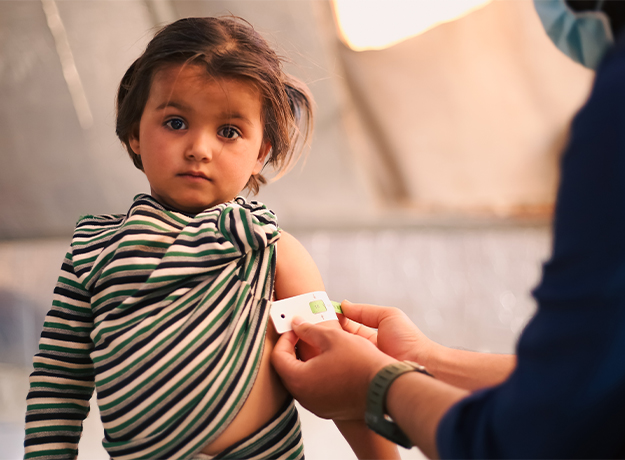
Technical Diploma in Managing Essential Health Services in Emergencies
Description
The Technical Diploma in Managing Essential Health Services in Emergencies provides a comprehensive and practice-oriented foundation for professionals responsible for ensuring continuity of primary health care services during crises. The program examines the major public health challenges that arise in emergencies—including communicable and non-communicable diseases, maternal and child health risks, nutrition, environmental health hazards, and community-based emergency response.
Using real-world emergency scenarios and evidence-based approaches, the diploma equips participants with the operational skills needed to assess public health risks, implement rapid interventions, coordinate essential services, and support affected populations in complex and resource-limited settings.
Objectives
Upon completion of the program, participants will be able to:
- Maintain and manage primary health care functions during emergencies.
- Utilize epidemiological tools to assess and respond to public health emergencies effectively.
- Conduct rapid assessments and implement contextually relevant interventions in disaster scenarios.
Modality
This Technical Diploma is delivered through a fully self-paced online modality, allowing participants to access all learning materials and activities at their convenience. The program includes interactive content, pre- and post-tests to support knowledge acquisition. Participants can learn at their own pace and revisit modules as needed throughout the course duration.
Target Audience
This program is designed for public health professionals and primary health care providers involved in emergency response, including physicians, nurses, midwives, pharmacists, dentists, nutritionists, and community health workers. It is also suitable for staff from ministries of health, NGOs, humanitarian agencies, emergency management teams, and those working in refugee or displacement settings who seek to strengthen their skills in maintaining essential health services during crises.
Certification
Graduates will receive a Technical Diploma in Technical Diploma in Managing Essential Health Services in Emergencies issued by the International Academy of Public Health (IAPH).
Admission Requirements
To enroll in this technical diploma, applicants should:
- Hold a bachelor’s degree in medicine, nursing, public health, pharmacy, nutrition, allied health, or any related health or social science field.
- Have professional experience or interest in primary health care, emergency response, humanitarian work, or health service delivery (preferred but not required).
- Demonstrate the ability to study in English and complete online learning materials and assessments.
- Have access to a computer and reliable internet connection to participate in the self-paced online modules.
Module 1: Communicable and Non-Communicable Diseases in Emergencies

Communicable diseases are a significant cause of mortality and morbidity in emergencies, and particularly in complex emergencies, where collapsing health services and disease control programs, poor access to health care, malnutrition, interrupted supplies and logistics, and poor coordination among the various agencies providing health care often coexist. The leading causes of morbidity and mortality in emergencies are diarrheal diseases, acute respiratory infections, measles, and, in areas where it is endemic, malaria.
At the same time, non-communicable diseases are assuming increasing importance among adult populations in both developed and underdeveloped countries. They pose a serious public health threat to the population, a threat that is magnified by and during complex emergencies and natural disasters. These diseases include cardiovascular disease, coronary heart disease, hypertension, stroke, rheumatic heart disease, cancer, diabetes, obesity, blindness, accidents and injuries, and mental health. Knowing the epidemiology of these diseases is essential for their prevention and control. However, NCDs continue to receive little attention from humanitarian organizations in the acute phase of disaster and emergency response.
This course is designed to help participants prevent, detect, and control the major communicable and non-communicable diseases that affect populations during emergencies. The course covers the fundamental principles of infectious disease control in emergencies, including rapid assessment, prevention, surveillance, outbreak control, and disease management. In addition, this course explains the importance of NCDs, mental health, and psychosocial support interventions in disasters.
Learning Outcomes
By the end of this module, the participant will be able to:
- Identify and manage the communicable disease threats faced by the emergency-affected population to prevent and contain any emerging epidemic
- Recognize the epidemiology of NCDs and the impact of disasters on them
- Study the effects of disasters on the mental health of the general population and victims.
- Explore the different strategies to provide the necessary psychological support to the affected population.
Module Outline
- Communicable Diseases in Disasters.
- Epidemiological Clues to Deliberate Outbreaks.
- Strengthening Disease Surveillance Systems During Emergencies.
- Preventing and Containing Emerging Epidemics.
- Practical Aspects of Personal Safety in the Field.
- Noncommunicable Diseases in Emergencies.
- Epidemiology of NCDs and Global Burden of Diseases.
- NCDs Surveillance Systems and Indicators.
- Introduction to Injury Epidemiology.
- Injury Surveillance.
- Mental Health and Psychological Problems in Emergencies.
- Public Health Interventions for Mental Health and Psychosocial Support in Emergencies.
- Old Age Care in Emergencies.
Module 2: Women and child health in humanitarian settings
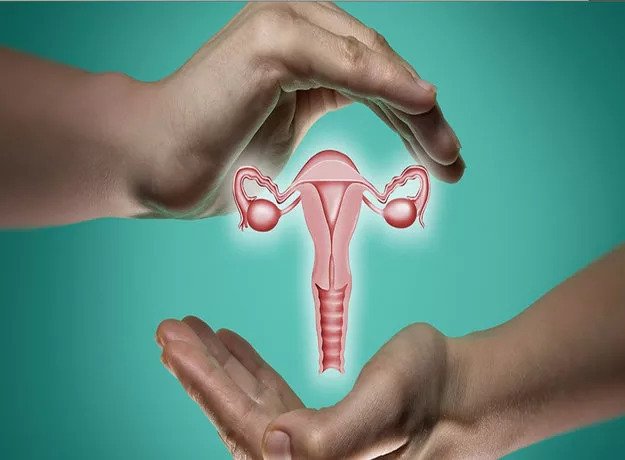
In the past, reproductive health was a sector that was rarely addressed during emergencies. As the trend has become for emergencies to evolve and become more protracted, it has become even more essential to develop programming related to reproductive health. Many aspects of reproductive health in emergencies remain the same as those in non-emergency settings. However, other elements must be considered, such as trauma, family separation, poverty, and social instability, that may affect their needs and risks.
This course focuses on the priority reproductive health needs of the population and outlines a logical approach to establishing reproductive health services in emergencies.
Learning Outcomes
By the end of this module, the participant will be able to:
- Discuss the leading causes of morbidity and mortality among women in emergencies
- Assess reproductive health needs and plan the reproductive health services in emergencies
- Implement the Minimum Initial Services Package (MISP) and more long-term reproductive health care services for populations
- Monitor and evaluate reproductive health services
Module Outline
- Reproductive Health in Emergency.
- Minimum Initial Service Package (MISP).
- Reproductive Health Programming in Emergencies.
- Coordination of Sexual and Reproductive Health Services During Crises.
- Gender-Based Violence (GBV).
- Child Protection in Emergencies.
- Social Mobilization for Vaccine Campaigns.
- Vaccine Prioritization and Mass Vaccination.
- Management of Vaccines During Emergencies.
Module 3: Nutrition in Emergencies

Disasters such as drought, floods, and wars lead to acute and chronic health problems, particularly malnutrition. During emergencies, large numbers of affected and displaced people depend on external assistance, at least in the acute phase of disasters. Governments, NGOs, and UN agencies all provide nutritional support to these individuals at some point. However, without the necessary knowledge and skills to manage such situations, this support has poor output.
The course highlights the essential concepts of food and nutrition, providing students with crucial knowledge and skills to address nutrition in disaster situations.
Learning Outcomes
By the end of this module, the participant will be able to:
- Understand food and nutrition threats on disasters to predict and lessen their impacts
- Recognize the food supply chain and appropriate food rations in an emergency
- Diagnose the types of malnutrition
- Conduct a rapid nutritional assessment
- Design nutrition interventions in emergencies
- Promote the importance of breastfeeding during an emergency
Module Outline
- Basic food and nutrition concepts and key food groups
- Macronutrients and micronutrients and their role in a balanced diet
- Description of food chain
- Food security and early warning
- Components of emergency ration
- Definition of malnutrition
- Identification of the most vulnerable groups
- Analyzing causes of malnutrition using an analytic framework
- Nutritional indicators to know whether there will be an emergency (Early warning), the most vulnerable groups, and food supply following an emergency
- Methods for measuring and classifying nutrition status using cut-off points
- Objectives of the rapid assessment
- Information needed and its sources
- Methods/techniques used in initial assessment
- Common nutrition interventions and the target groups for each intervention
- Types and objectives of the selective feeding program
- Decision-making framework for establishing a selective feeding program
- The criteria used for the assessment of the effectiveness of selective feeding programs
Module 4: Environmental Health in Emergencies
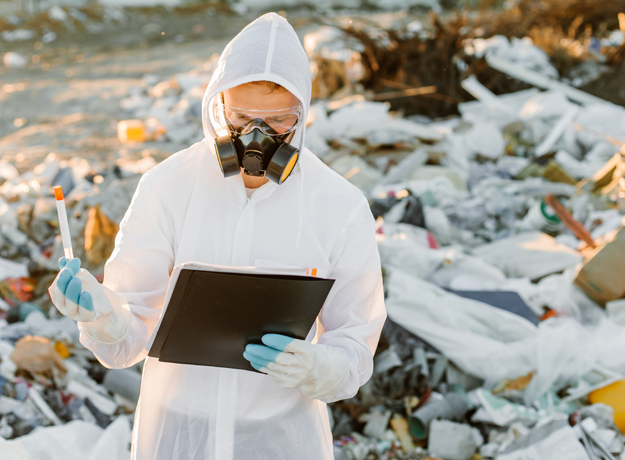
Environmental health hazards are closely linked to disasters and emergencies in various ways. A broad range of activities can be designed to enable the health sector to prevent, mitigate, and respond to such hazards. Disasters and development are interconnected in ways that necessitate the contributions of environmental health professionals. Through better education and higher incomes, development can improve people’s capacity to cope with environmental health hazards. On the other hand, certain types of development can create new hazards or new groups of people vulnerable to them. Strategic planning to increase the capacity of people to withstand disaster hazards must include concerns for environmental health.
Environmental health activities are interdisciplinary, involving engineering, health sciences, chemistry, biology, and a variety of social, management, and information sciences. During times of disaster and recovery, people from diverse backgrounds participate in activities aimed at monitoring, restoring, and maintaining public health.
Learning Outcomes
By the end of this module, the participant will be able to:
- Explain public health interventions to manage environmental threats during emergencies
- Respond to emergencies with appropriate environmental health activities (water supply and sanitation, vector control, etc.)
- Guide environmental health priority needs and actions in the prevention, preparedness, response, and recovery stages of the disaster-management cycle
- Coordinate and collaborate between all sectors related to environmental health
Module Outline
- Introduction to Environmental Health in Disasters
- Assessment of EH vulnerability
- Management of disaster with a focus on EH
- The national emergency preparedness process for EH
- Evacuations and temporary settlements
- Environmental health indicators in the emergency phase
- Post-disaster environmental health activities and sustainable development
- Water and EH
- Sanitation
- Vector Control
- Environmental Health Surveillance
- Environmental health and the Control of communicable diseases and prevention of epidemics
Module 5: Community-Based Risk Management
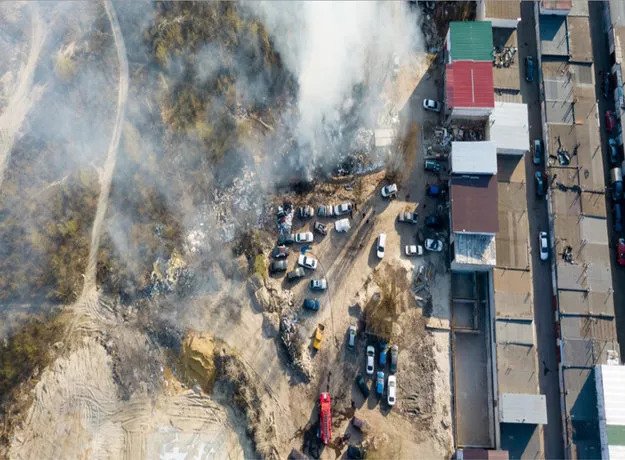
Communities are the first to suffer from emergencies and the first to respond. Many initiatives, programs, and projects have proven successful through active community participation in community-based models.
This unit uses case studies to cover qualitative and quantitative risk, hazard, vulnerability, and capacity assessments in community settings. It also emphasizes integration of risk with resource assessment, hazard mapping, simulation exercises, potential disaster loss, and levels of acceptable risk assessments. Additionally, it includes training on how to utilize risk and vulnerability assessments to develop prevention and mitigation strategies at the national, provincial, and local levels.
Learning Outcomes
By the end of this module, the participant will be able to:
- Appreciate the importance of the community-based disaster risk reduction approach
- Plan and implement CBDRR projects
- Conduct a community-based risk assessment
- Evaluate the CBDRR projects
Module Outline
- Introduction to Community-Based Disaster Risk Management.
- Participatory Community Disaster Risk Reduction Plan.
- Participatory Risk Assessment Tools.
- Risk Perception and Community Participation in Risk Management.
- Community Participation in Risk Management.
- Public Awareness.
- Volunteer Management in Disasters.
Module 6: Public Health Management of Mass Gatherings

Communities are the first to suffer from emergencies and the first to respond. Many initiatives, programs, and projects have proven successful through active community participation in community-based models.
Mass gatherings are events attended by a large number of people over a period of time in a marginalized space. These conditions cause a strain on the planning and response resources of the host community where such events are being held. “Mass Gathering Medicine and Public Health” is a new field that focuses on the health risks of mass gatherings. The primary objective of this field is to minimize public health risks at mass gatherings through effective surveillance, alert systems, and response mechanisms.
Naturally, public health concerns arise under such conditions, which include the occurrence of injuries, communicable diseases, non-communicable diseases, exhaustion, and heat-related illnesses, as well as other public health-related issues. Such circumstances impose significant challenges on public health systems. Based on these findings, there is a need for a better understanding of public health threats, the strengthening of public health systems, and the enabling of evidence-based decision-making. Furthermore, there is a demand to enhance preparedness, optimize surveillance, and develop rapid response capacities during mass gatherings.
Learning Outcomes
By the end of this module, the participant will be able to:
- Differentiate between various types of mass gathering events on a global and regional level
- Identify the main public health concerns during mass gathering events
- Identify the components of public health surveillance during mass gathering events
- Conduct a risk assessment for mass gatherings
Module Outline
- Mass Gatherings at the Global and Regional Levels.
- Public Health Concerns During Mass Gatherings.
- International Health Regulations in Mass Gatherings.
- Preparedness and Response Plans for Mass Gatherings.
- Public Health Recommendations During Mass Gathering Events.
- Risk Assessment in Mass Gathering.
- Haddon’s Matrix for Mass Gathering.
- Risk Communication During Mass Gatherings.
Diploma Features: