Technical Diploma in Environmental Risk Assessment and Communication
Description
The Technical Diploma in Environmental Risk Assessment and Communication equips professionals with the essential knowledge and skills to identify, assess, manage, and communicate environmental and occupational health risks that affect populations.
The program blends scientific analysis with practical communication strategies, preparing participants to address real-world environmental health challenges and support evidence-informed public health decisions.
This program is designed for professionals responsible for identifying, assessing, and communicating environmental and occupational health risks that affect populations. Eligible participants include environmental health officers, public health inspectors, toxicologists, environmental scientists, and WASH specialists. It also suits disaster risk reduction professionals, occupational and industrial hygienists, and emergency preparedness officers working in environmental protection or public safety institutions. Practitioners in ministries of environment, health, water, agriculture, or municipalities involved in environmental monitoring, regulation, or public risk communication are likewise eligible.
Through six structured modules, participants explore the foundations of epidemiology, environmental and occupational health, toxicology, risk assessment, risk management, and risk communication.
By the end of the diploma, participants will be able to evaluate environmental and occupational hazards, develop evidence-based management strategies, and apply effective risk communication techniques to promote safer and healthier environments within their communities and institutions.
Objectives
Upon completion of the program, participants will be able to:
- To enable students to recognize and describe major environmental and occupational health hazards and their impact on population health.
- To build students’ capacity to assess and manage environmental exposures through epidemiologic, toxicologic, and risk-based approaches.
- To strengthen students’ ability to communicate environmental risks clearly and effectively to the public, policymakers, and stakeholders.
- To prepare students to apply foundational research methods to evaluate interventions and support evidence-informed environmental health practices
Modality
This Technical Diploma is delivered through a fully self-paced online modality, allowing participants to access all learning materials and activities at their convenience. The program includes interactive content, pre- and post-tests to support knowledge acquisition. Participants can learn at their own pace and revisit modules as needed throughout the course duration.
Target Audience
Public health professionals and technical officers; environmental and occupational health practitioners; healthcare workers seeking leadership roles; and early-career professionals aiming to build skills in risk assessment, management, and communication.
Certification
Graduates will receive a Technical Diploma in Environmental Risk Assessment and Communication issued by the International Academy of Public Health (IAPH).
Admission Requirements
To enroll in this technical diploma, applicants should:
- Hold a bachelor’s degree in public health, environmental health, medicine, nursing, laboratory sciences, toxicology, environmental sciences, or a related field.
- Have professional experience or interest in environmental health, risk assessment, occupational health, or emergency preparedness (preferred but not required).
- Be proficient in English to follow course materials.
- Have access to a computer and reliable internet connection to complete the online courses.
Module 1: Basic Epidemiology

This Module teaches epidemiologic concepts, methods, and perspectives for use in research and clinical, evidence-based health care. A general introduction is presented to the approach, concepts, methods, and perspectives of epidemiology for students and practitioners in a broad range of public health and related disciplines. The Module employs problem-based learning where you apply the epidemiologic approach to a variety of current public health questions. It will improve the ability of students to think analytically and to understand and interpret population-based and clinical research. This training module is delivered over the duration of 30 learning hours.
Learning Outcomes
By the end of this module, the participant will be able to:
- Discuss, apply, and interpret basic epidemiologic concepts and measures of disease occurrence in populations: incidence, prevalence, relative risk, attributable risk, standardization.
- Investigate an outbreak of a health problem in a community, making use of the concepts of disease variation in time, person, and place.
- Explain the relative strengths and limitations of epidemiological studies for studying associations between risk factors or exposures in populations and rates of disease occurrence or death.
- Identify the major sources of random and non-random error in community and multinational health studies and suggest strategies to reduce error.
- Evaluate epidemiologic evidence by applying criteria for causal inference to information about an association between a population exposure and health outcome.
- Use epidemiologic methods in evaluating effectiveness of public health intervention programs in varying geopolitical contexts.
Module Outline
- Introduction to Epidemiology
- Introduction to Disease Burden
- Morbidity-based measures
- Mortality-based measures
- Composite Measures of Disease Burden
- Understanding Life Expectancy Measures Life Expectancy at Birth and Healthy Life
- Understanding Economic Impact Measures
- Measures of Association and Impact
- Overview of Epidemiologic Study Designs
- Introduction to Biostatistics
- Public Health Surveillance
- Outbreak Investigation Part 1
- Outbreak Investigation Part 2
- Data Quality
Module 2: Epidemiology of Environmental and Occupational Health

This Module is concerned with the environmental and occupational branches of epidemiology. It introduces the basic epidemiologic concepts within the framework of environmental health. Occupational epidemiology studies the effect of a variety of exposures in the workplace, such as chemical, biological, or physical (e.g., noise, heat, radiation) agents on workers and evaluate adverse health outcomes to determine if an agent or set of agents may explain their disease. Students will learn to link external factors that affect the incidence, prevalence, and geographic range of health conditions. They will also illustrate how they are used to address public health problems. This module also covers a wide range of topics that are related to the application of epidemiological methods in populations of workers. This training module is delivered over the duration of 30 learning hours.
Learning Outcomes
By the end of this module, the participant will be able to:
- Specify approaches for assessing, preventing, and controlling environmental hazards that pose risks to human health and safety.
- Explain the general mechanisms of toxicity in eliciting a toxic response to various environmental exposures.
- Comprehend basic ethical and legal principles pertaining to the collection, maintenance, use and dissemination of epidemiologic data.
- Draw appropriate inferences from epidemiologic data.
- Evaluate the strengths and limitations of epidemiologic reports.
- Bridge the connection between fundamentals of study design and principles in epidemiologic methods.
- Use epidemiological techniques to conduct occupational studies that are suitable to assess risk in a workplace.
- Evaluate the occupational studies methodologies, flaws, and limitations.
Module Outline
- Environmental Epidemiology: Basic Principles and General Practice
- Study Designs in Environmental Epidemiology
- Assessments in Environmental Epidemiology
- Toxic Effects of Heavy Metals
- Environmental Disease: Mutation, Cancer, and Birth Defects - Part 1
- Environmental Disease: Mutation, Cancer, and Birth Defects - Part 2
- Epidemiology of Indoor Air Pollution
- Benefits of SEA
Module 3: Principles of Toxicology
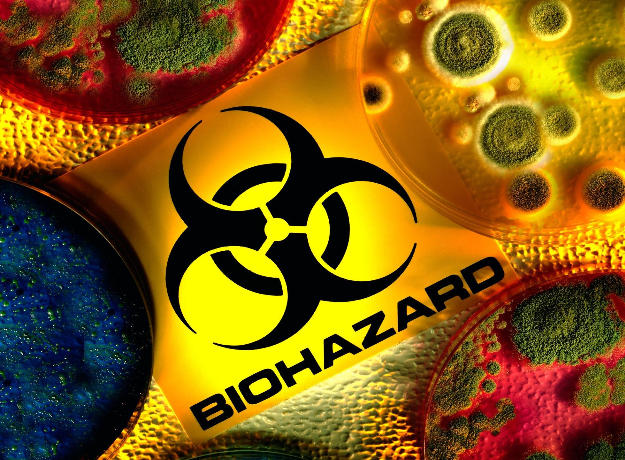
This Module focuses on the fundamentals of toxicology and the mechanisms by which environmental and occupational chemical agents affect human health. The principles and mechanisms will be approached in three areas:
- 1. General principles: Route of exposure; dose response; absorption, distribution, storage, metabolism and excretion.
- 2. Effects on target organs: liver, kidney, blood, respiratory system and nervous system.
- 3. Application of the principles of toxicology using: solvents, pesticides and metals.
At the end of this module, the students will be able to apply the principles of toxicology for compounds found in the environment and workplace. This training module is delivered over the duration of 30 learning hours.
Learning Outcomes
By the end of this module, the participant will be able to:
- Explain the impact of the conditions of exposure – routes, duration, and frequency – on the toxic effects of compounds.
- Explain and interpret the relationship between dose and the toxic response.
- Describe the processes of absorption, distribution, storage, and excretion and apply the principles of toxicant transport across membranes to the uptake, action and excretion of chemical agents.
- Describe and characterize the types of reactions in Phase I and Phase II metabolic pathways and give prototypical examples of each.
- Explain mechanisms whereby toxicants cause injury to the liver, kidney, lung, and nervous system and give examples of prototypical toxicants for each organ.
- Identify the acute and chronic effects of hydrocarbons, halogenated hydrocarbons, pesticides, and heavy metals, characterize their mechanisms of toxicity, and describe measures to prevent or decrease toxic effects.
Module Outline
- Introduction to Toxicology
- Toxicodynamics and Toxicokinetics
- Reproductive Toxicity, Immunotoxicity, and Skin Toxicity
- Pesticides Toxicity
- Metals Toxicity
- Respiratory Toxicology
- Hepatotoxicity and Nephrotoxicity
Module 4: Environmental Risk Assessment

This Module develops the qualitative and quantitative skills necessary to evaluate the probability of health effects from exposure to environmental contaminants. Basic concepts of qualitative and quantitative risk assessment are demonstrated with practical case studies. Emphasis is placed on hazard identification, dose-response evaluation, exposure assessment, and risk characterization. Integration of risk assessment with risk management and communicating risks to the public are discussed. Regulatory aspects of risk assessment in the promulgation of environmental standards are presented. This training module is delivered over the duration of 30 learning hours.
Learning Outcomes
By the end of this module, the participant will be able to:
- Define and discuss basic risk assessment concepts and their basis in human health toxicology.
- Identify and explain the four steps in qualitative and quantitative risk assessment: hazard identification; dose-response evaluation; exposure assessment; risk characterization.
- Use quantitative risk assessment methods and mathematical models for high-to-low dose extrapolation in non-cancer health outcomes.
- Use quantitative risk assessment methods and non-threshold mathematical models for cancer risk assessment.
- Discuss the derivation, uses, limitations and applications of uncertainty analysis and probabilistic risk assessment.
- Perform exposure assessments based on data from case studies.
- Evaluate the use of risk assessment within risk management and risk reduction decision making.
- Obtain and use published risk assessment guidelines and information resources for databases supporting the public health professional involved in risk assessment.
Module Outline
- Introduction to Risk Assessment
- Environmental Risk Assessment
- Health Assessment and Surveillance
- Uncertainties in Risk Assessments
Module 5: Environmental Risk Management

Public health is impacted via a wide spectrum of hazards ranging from physical, chemical and biological factors.
When they interact with people and health system vulnerability factors, people’s health and lives become at risk.
To minimize those risks, robust risk reduction measures need to be taken.
This training module is delivered over the duration of 30 learning hours.
Learning Outcomes
By the end of this module, the participant will be able to:
- Describe the cost of risks and the benefits of reducing them.
- Demonstrate the development of risk reduction plans.
- Budget for risk management.
- Take management decisions based on risk assessment outcomes.
Module Outline
- Risk Management
- Disaster Risk Management Frameworks
- Disaster Management Plan
- Information Management in Disasters
- Economics of Risk Management
- Environmental Hazards and Human Health
Module 6: Environmental Risk Communication

Risk communication refers to the dissemination of information to the public about health risks and events and encompasses the range of communication skills required through the preparedness, response, and recovery phases of a public health event. Risk communication is one of the core pillars of the response to public health risks and plays a vital role in influencing informed decisions and making positive behavior change.
The objective of this Module is to improve written and oral communication skills and to provide hands-on experience in the art of two-way communication of environmental and occupational issues between scientists and managers, policymakers and the public. This training module is delivered over the duration of 30 learning hours.
Learning Outcomes
By the end of this module, the participant will be able to:
- Explain the fundamental principles of communication and message development.
- Explain factors that contribute to the public’s perception of risk; compare the public’s view with scientists’ view.
- Describe techniques for working and listening to community concerns.
- Discuss factors and methods for working with the news media on environmental issues.
- Discuss and demonstrate the approach and level of scientific detail for communicating with policymakers.
- Research current issues, assimilate findings and communicate conflicting scientific opinions and/or public opinion.
- Develop written communication skills targeting the general public/communities, policymakers, and the news media.
Module Outline
- Introduction to Risk Communication During Emergencies
- Basics of Communication Skills
- Psychology of Crises
- Building Blocks of Risk Communication
- Setting Communication Objectives
- Development of Risk Communication Plans
- Development of Communication Message and Material
- Role of Information Technology in Risk Communication
- Media and Mass Communication Channels
- Messages and Audiences
- Spokesperson
- Community Engagement and Social Mobilization
- Resources, Stakeholder and Partners for Risk Communication
Diploma Features: